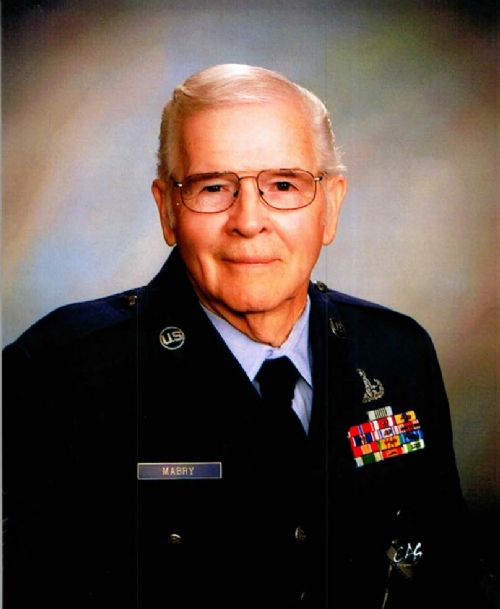
Teddy Max Mabry
Chief Master Sergeant, U.S. Air Force
Mabry was born on December 2, 1936, in Lake City, AR. Shortly after his high school graduation,
Mabry joined the U.S. Air Force on 6 June 1955. He received a high degree of
specialized training to include a 28-week Department of Defense Explosive Ordnance
Disposal course and also obtained a Top-Secret security clearance. By 1961, Mabry was assigned to Kindley Air
Force Base on the Bermuda Islands and tasked to establish an EOD and Disaster
Preparedness Program. During the Cuban
Missile Crisis, Mabry was selected by the Secret Service to work on the B-40
project, which was classified as top-secret. He had to assemble and operate instruments to monitor the atmosphere for
tritium gas which is detectable when nuclear weapons are in the area. He was required to send weekly samples to the
Pentagon. Throughout Mabry’s career, his
technical expertise, superior performance and leadership, would take him to
multiple overseas assignments, to include, Japan, Philippines, Thailand, Laos,
and Vietnam, as well as various locations stateside. Mabry would be recognized individually and
sometimes, along with other members of his unit, for their exceptional
execution of their duties. In 1974, the
Defense Attache, Major General Richard Trefry wrote a Letter of Commendation
for the work accomplished in Laos, "…they cleared village rice fields,
roadways, schools, and numerous other areas…. of munitions, often made
exceptionally hazardous through booby-trapping, fires, or deterioration. Concurrently, they provided training in
explosive items identification and disposal to members of the Lao armed forces…. As a result of their selfless efforts,
numerous lives were saved and goodwill toward the United States implanted in
the hearts of the people of Laos. Mabry
received many awards and decorations during his service, to include the Bronze
Star Medal, the Meritorious Service Medal with 2nd Oak Leaf Cluster,
the Air Force Commendation Medal with 1st Oak Leaf Cluster, as well
as others, but the award that was most meaningful was The Airman’s Medal for
Heroism received in 1970 for saving the life of a 9-year-old boy from a flooded
drainage system. Mabry retired from the
USAF on 30 June 1976 after more than 21 years of service but continued working
in the civilian sector in his hometown of Paragould until retiring in
1994. A reporter once asked him if his
EOD job made him nervous?” Mabry’s reply
was, "the job didn’t make you nervous. It makes you NOT nervous or you wouldn’t be here!”